

what we are going to do for our project:
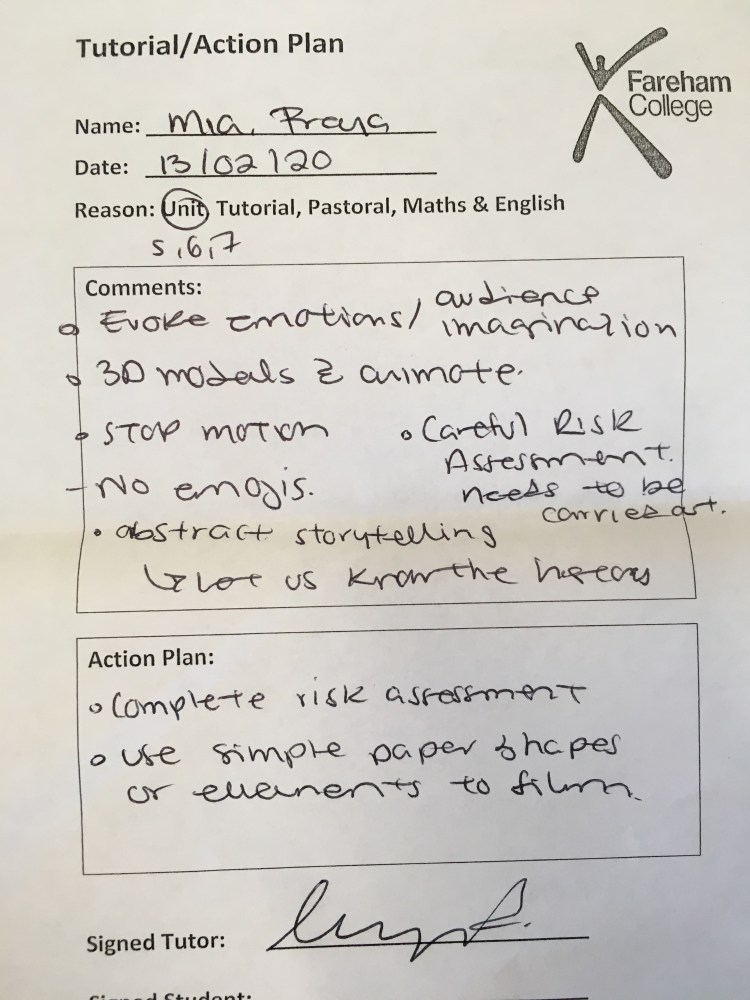
checklist of what we have done so far:
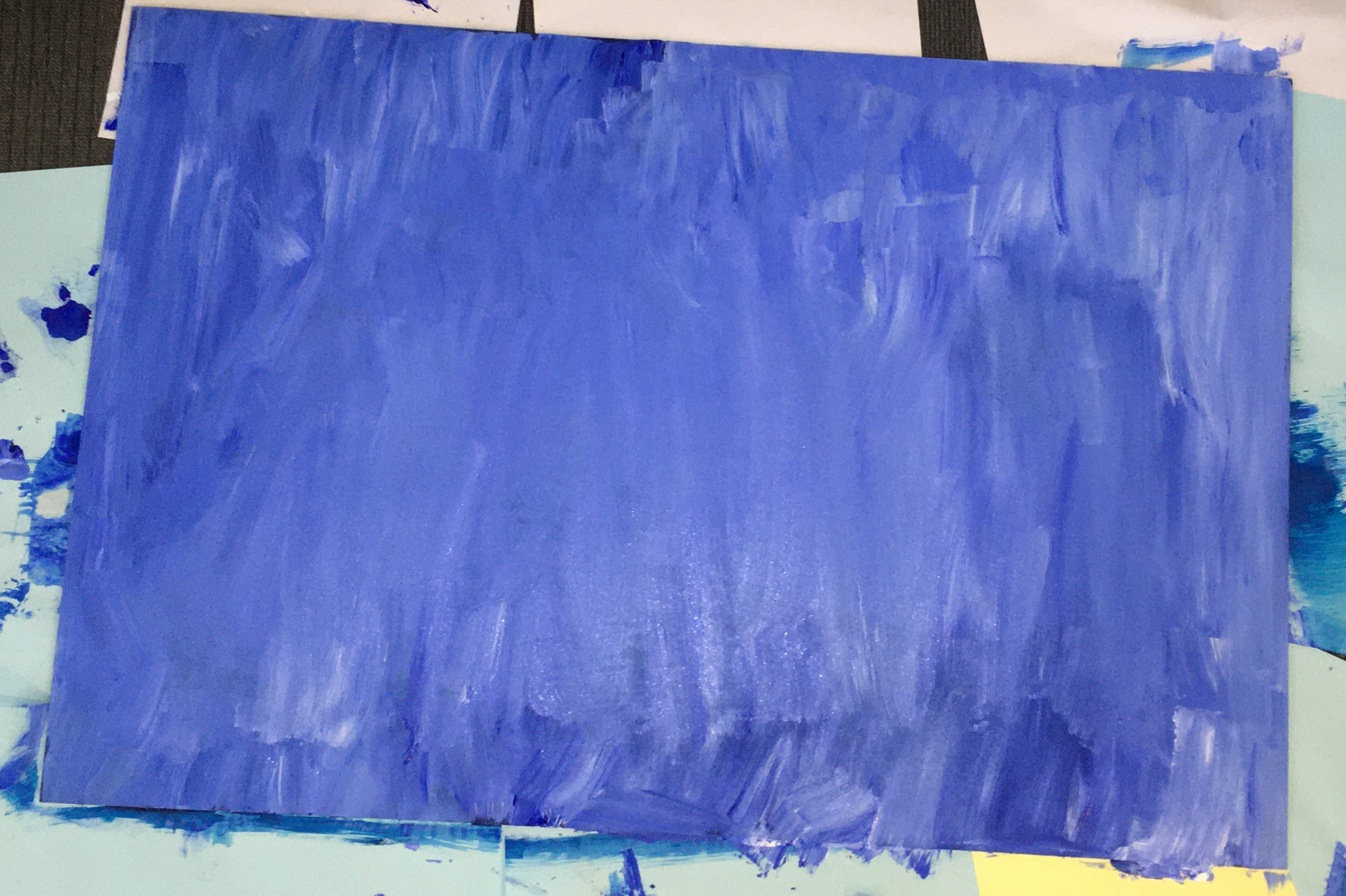
we have painted the blue sky yesterday so here it is dried today:
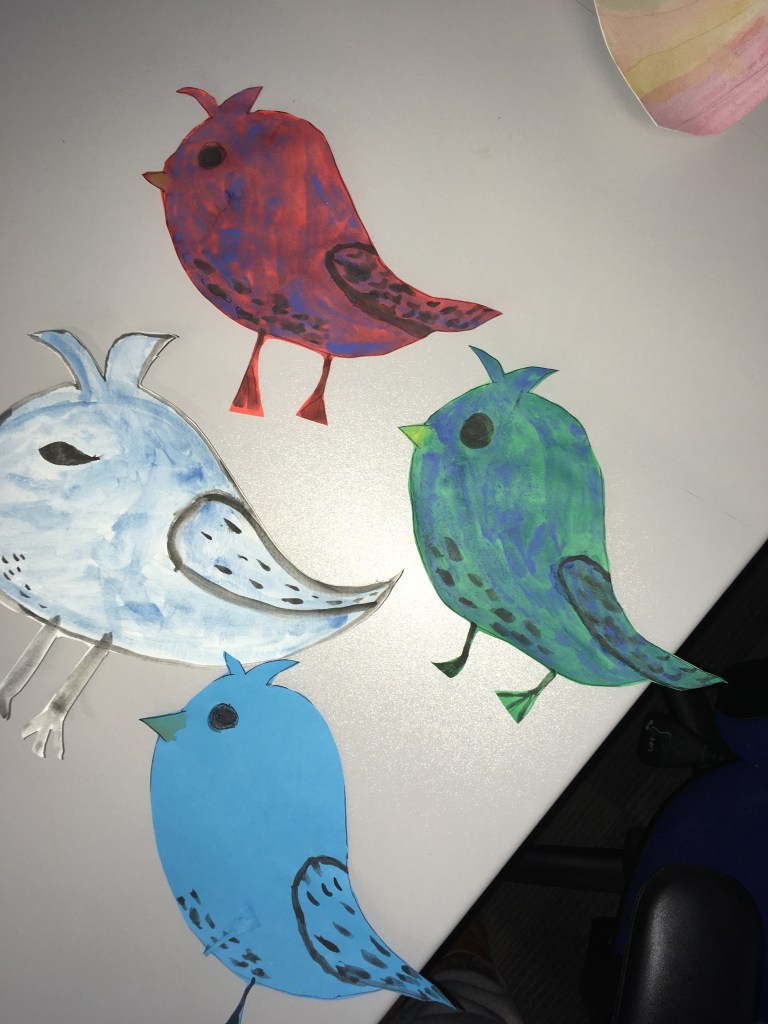
these are the birds we painted and cut out:
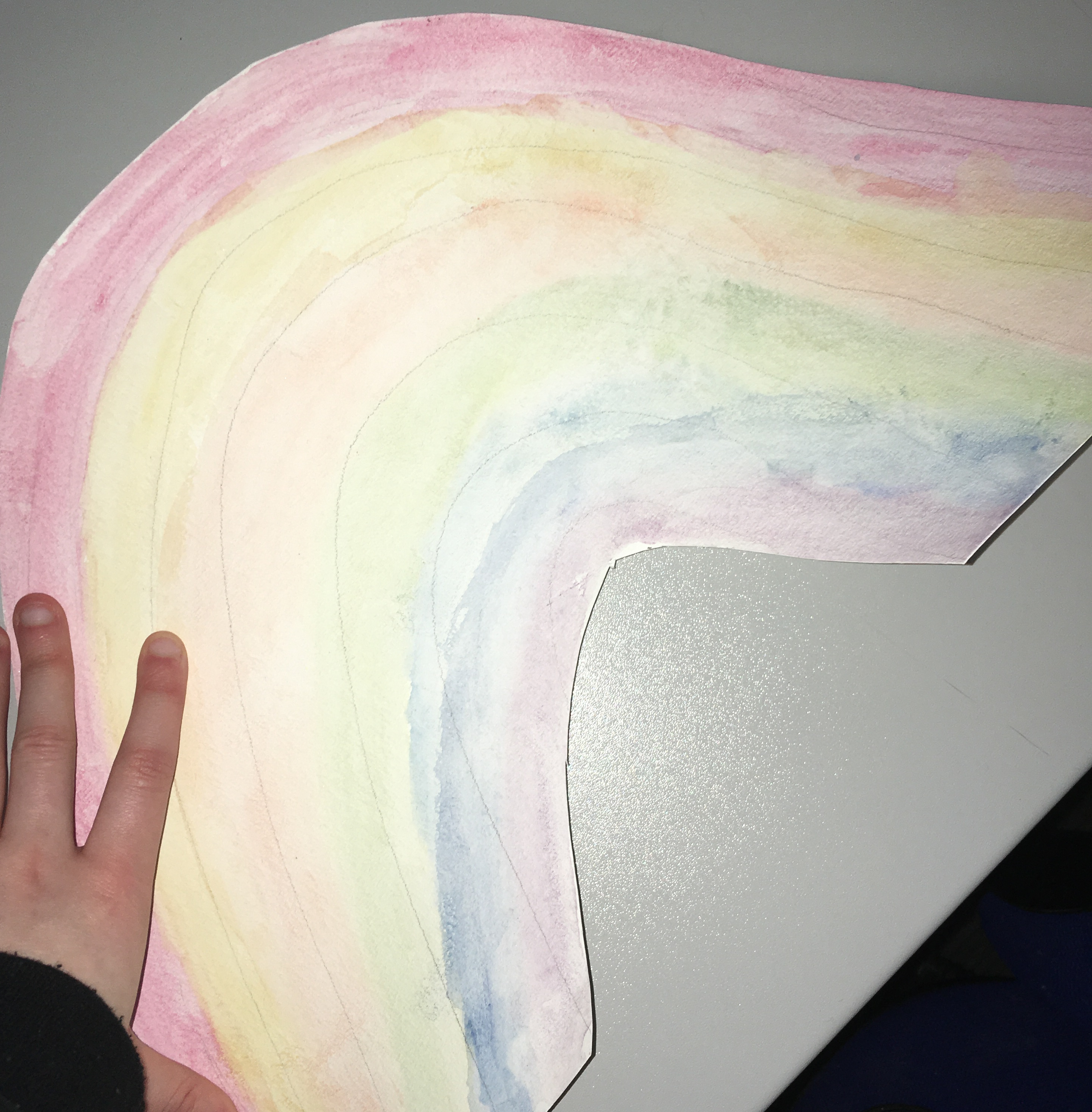
this the rainbow we painted:
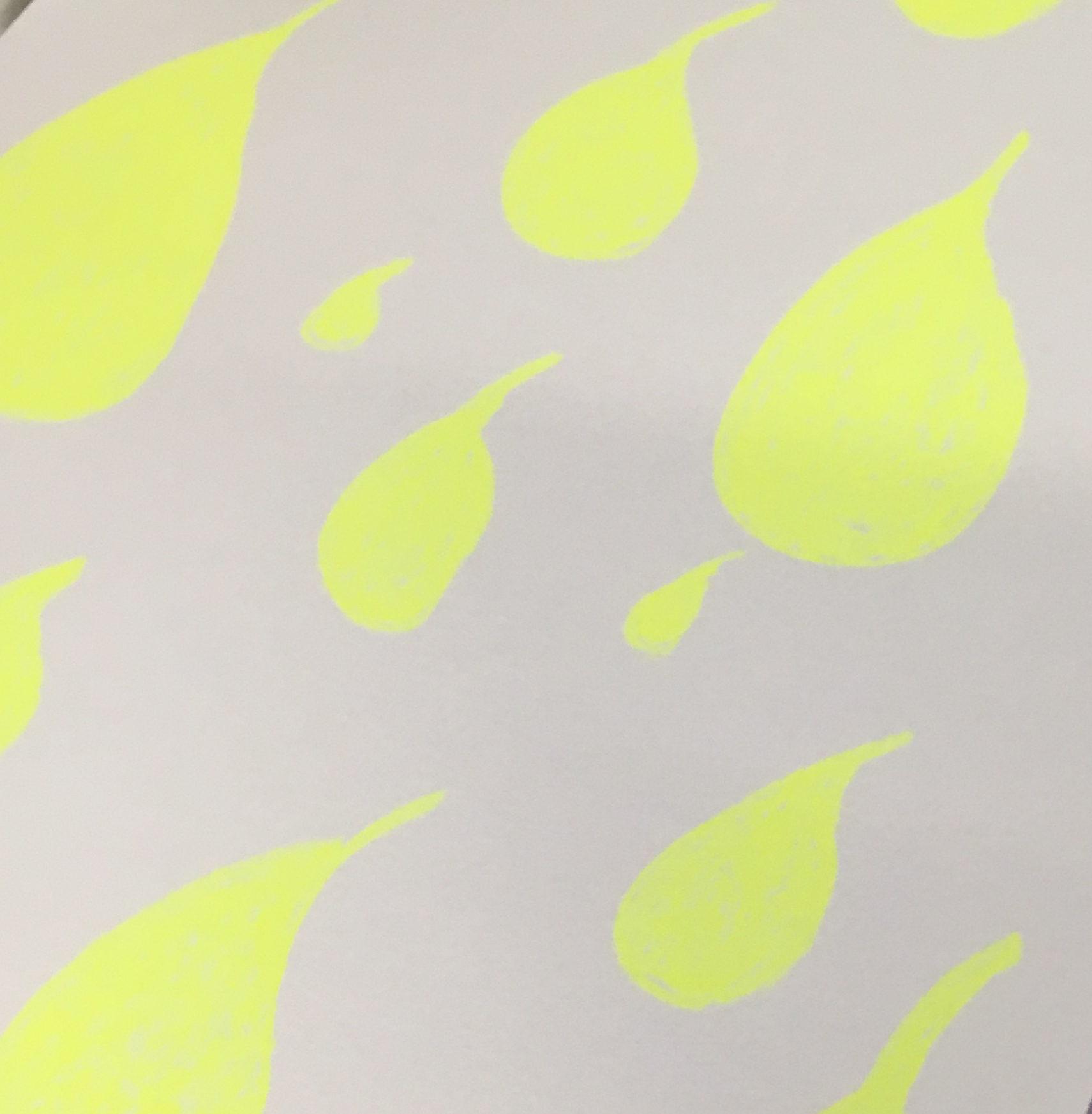
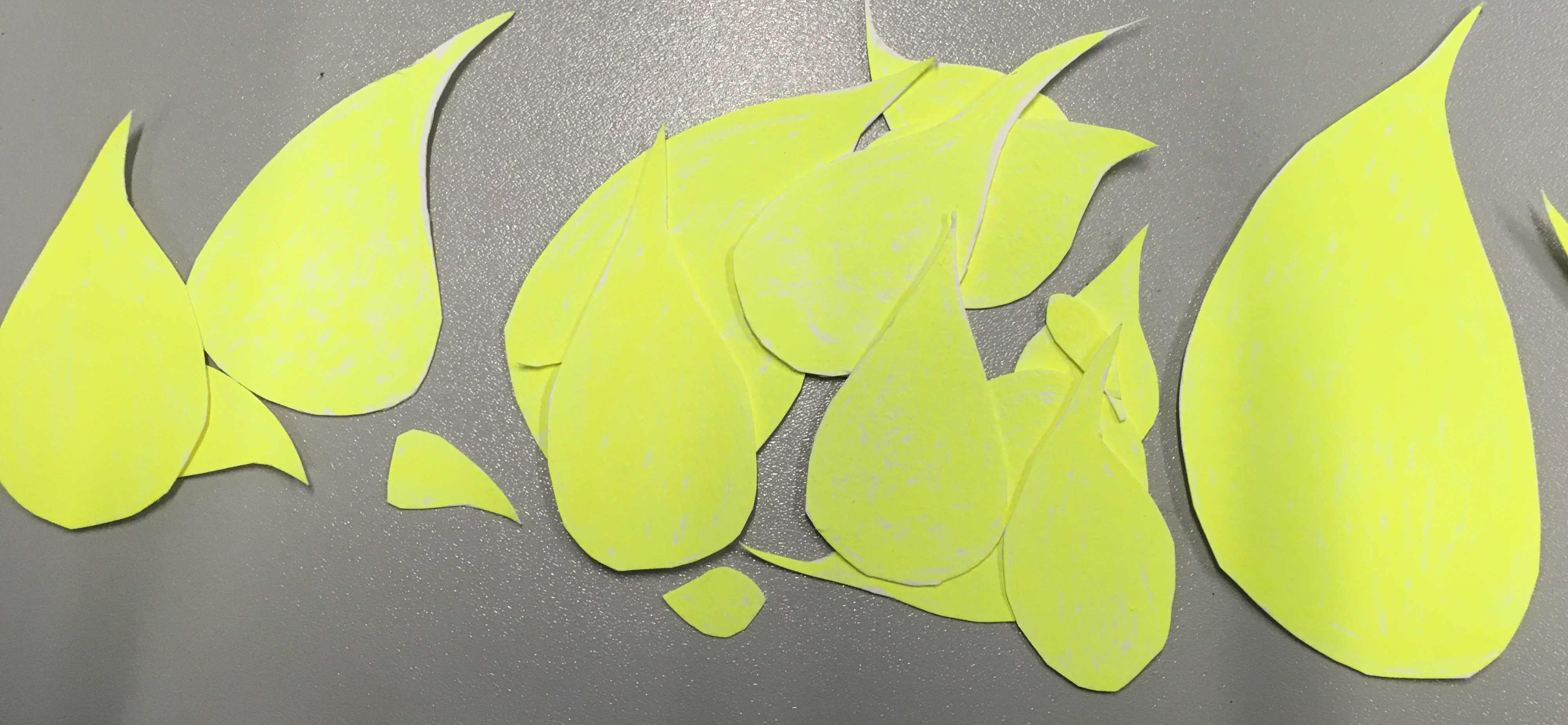
the lemon drops:
the grey smoke from the chimney tops:
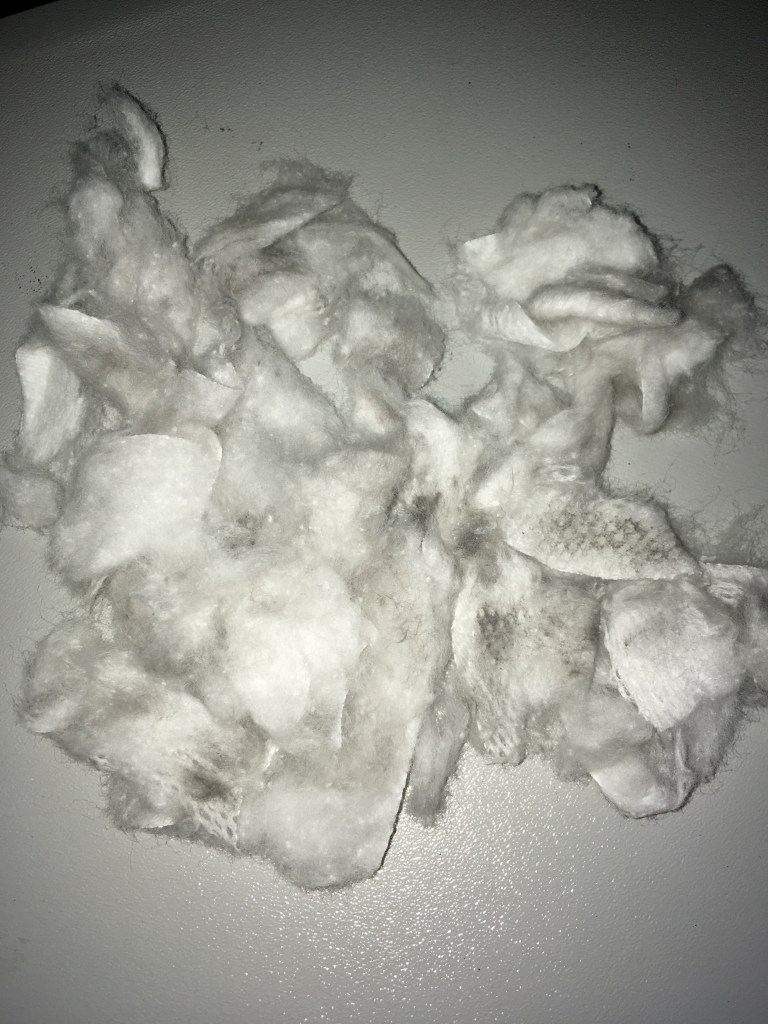
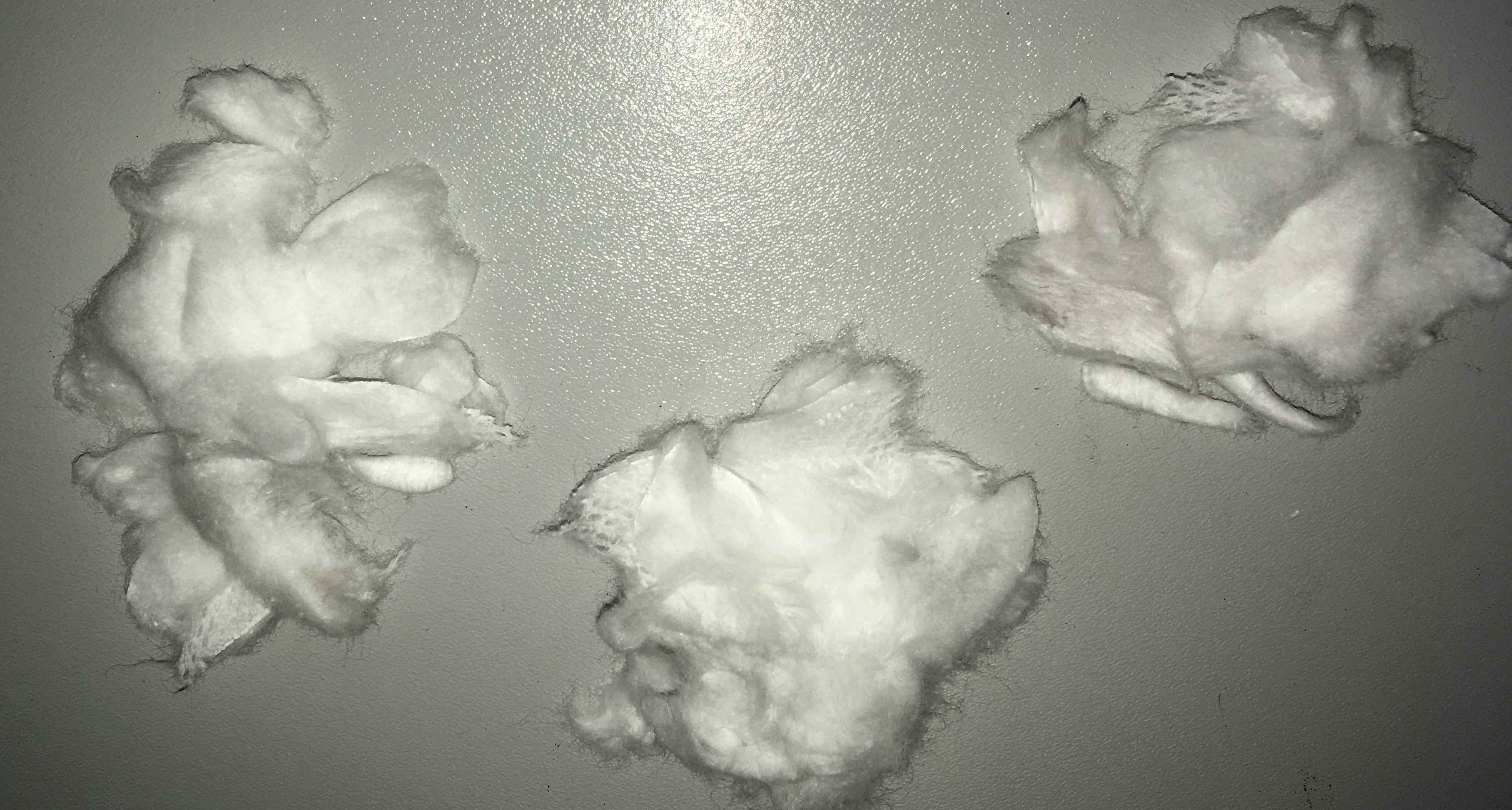
the clouds from cotton pads:
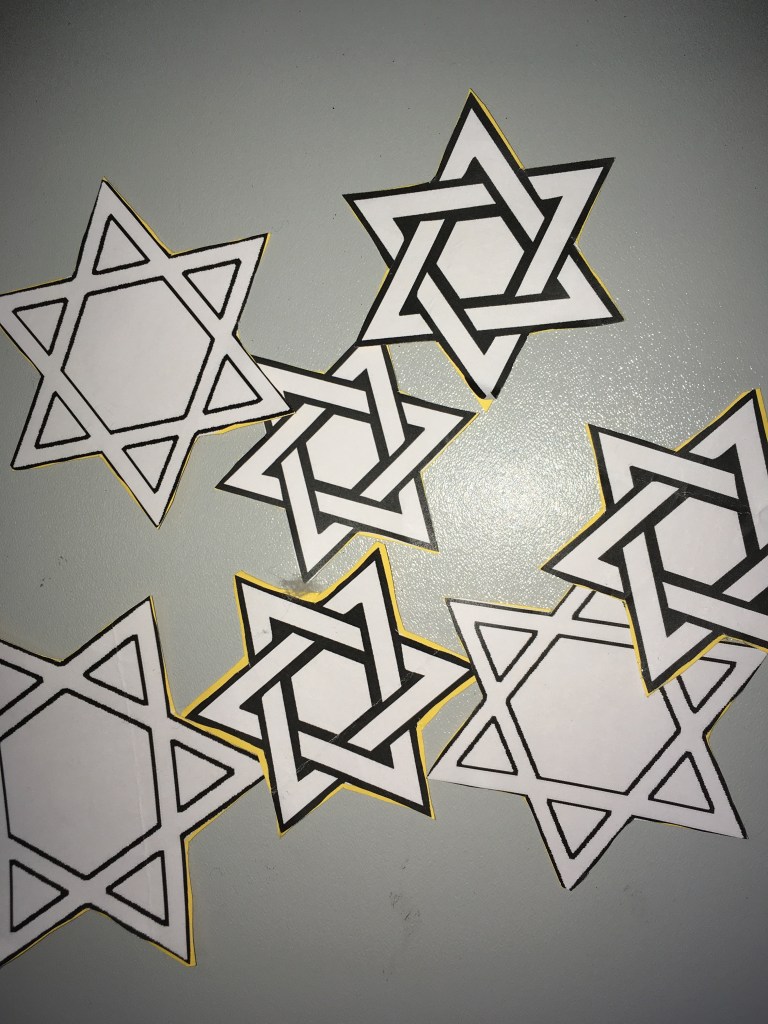
the stars:
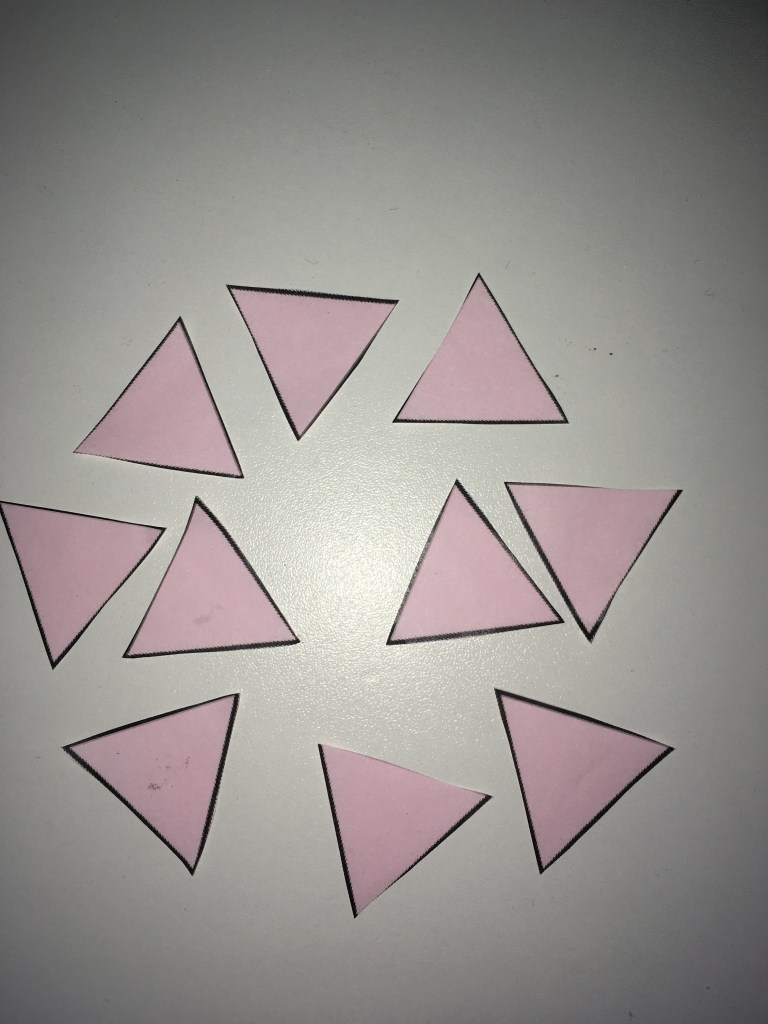
these are the pink triangles:
We are soon to be done on the props and then we can start filming our stop motion video, which will need help on as its going to take some time. So some other people have requested to help us to speed things up, and move the props around. So we have agreed that they can help us.
We have now filmed our stop motion video, it wasn’t that long to film, we had some help from other team members from different groups. As 2 people in our group weren’t there, but now the filming has done we are going to be learning how to edit the footage on Premiere Pro. I have saved all the footage onto my X drive folder from college, so I don’t lose it and people from my team or my teacher can use it. As its easier, so we will edit on Monday.And learn how to edit all the clips together in the right places, add in the music over the top, then publish the video. That’ll be our video project done.
in the process of making the props, some photos:
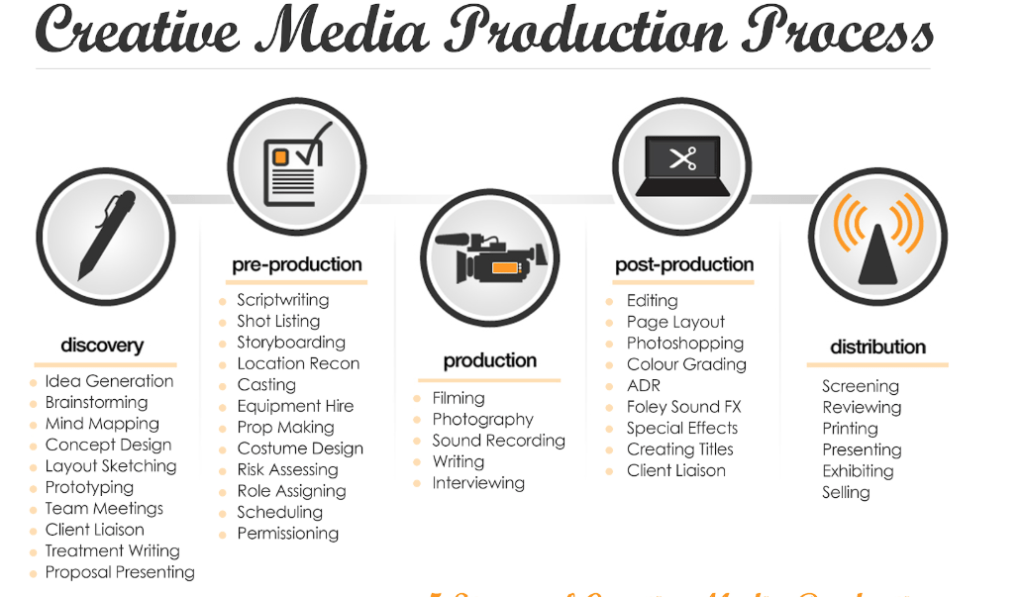
Our production name is called Rainbowava and this is just everything that we have done for Pre-Production, all combined together so its in one place.
The Risk Assessment:
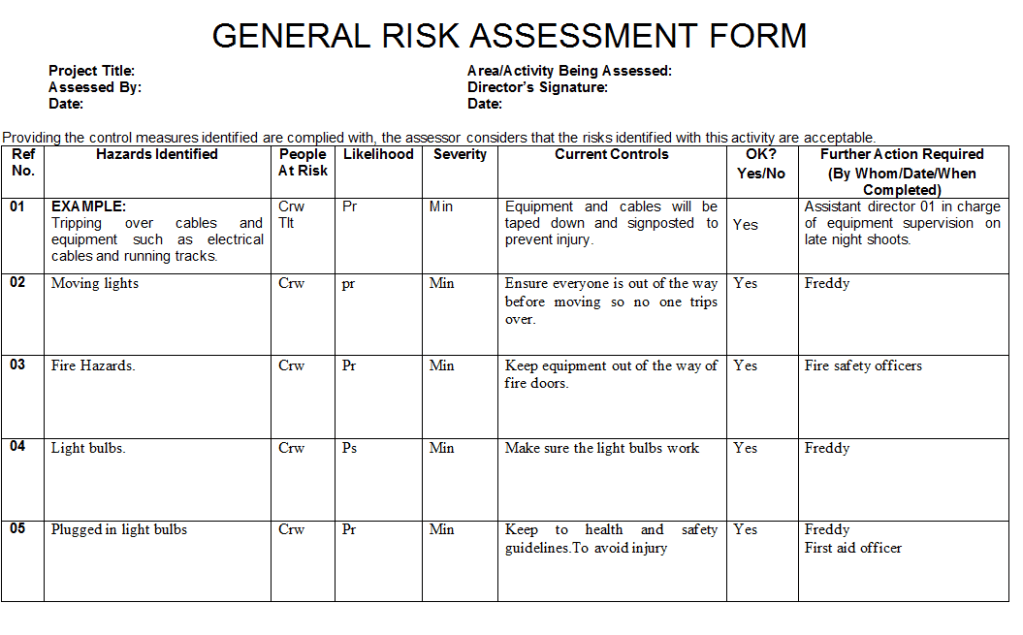
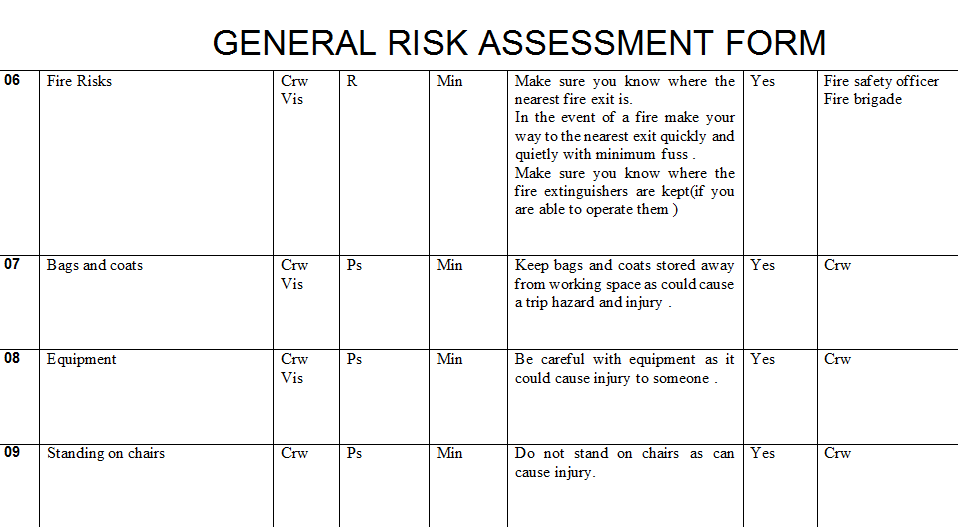
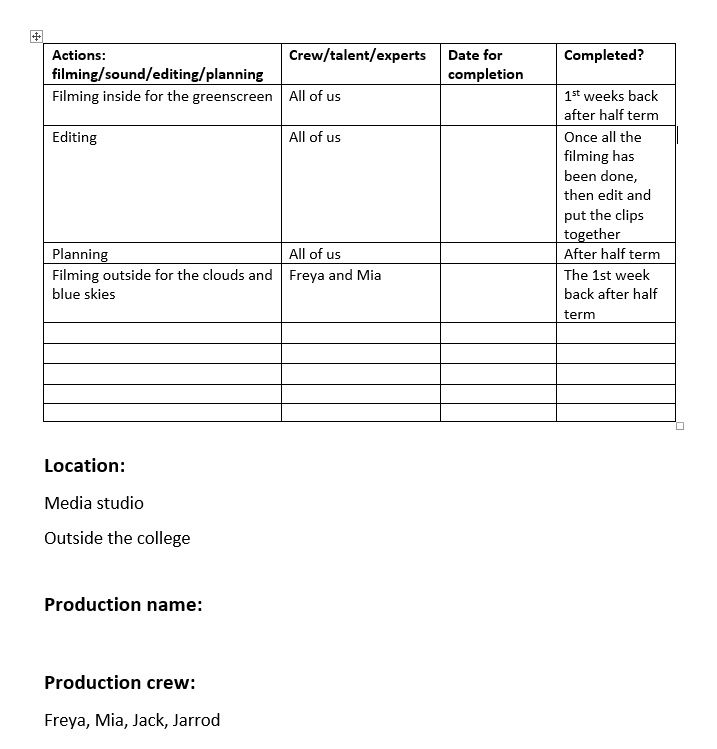
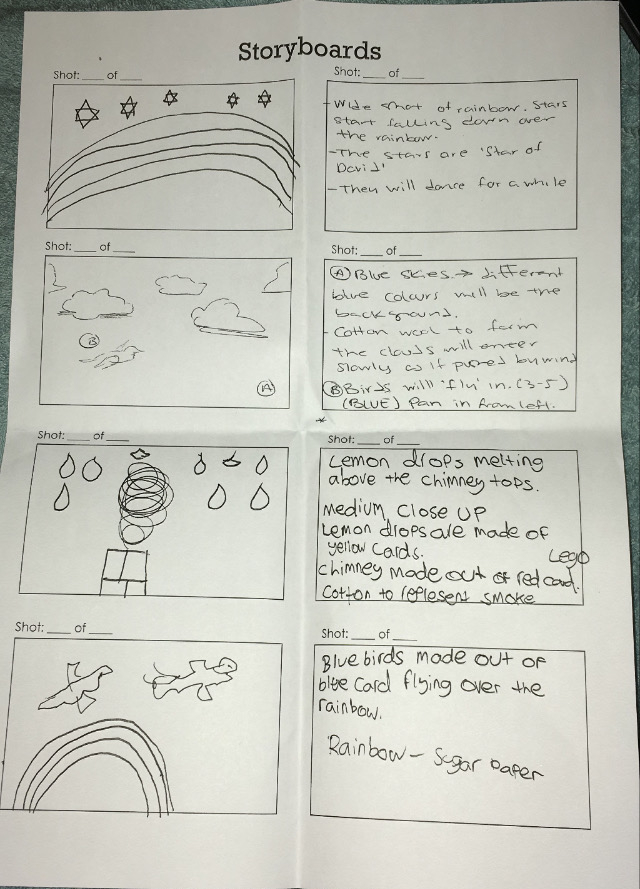
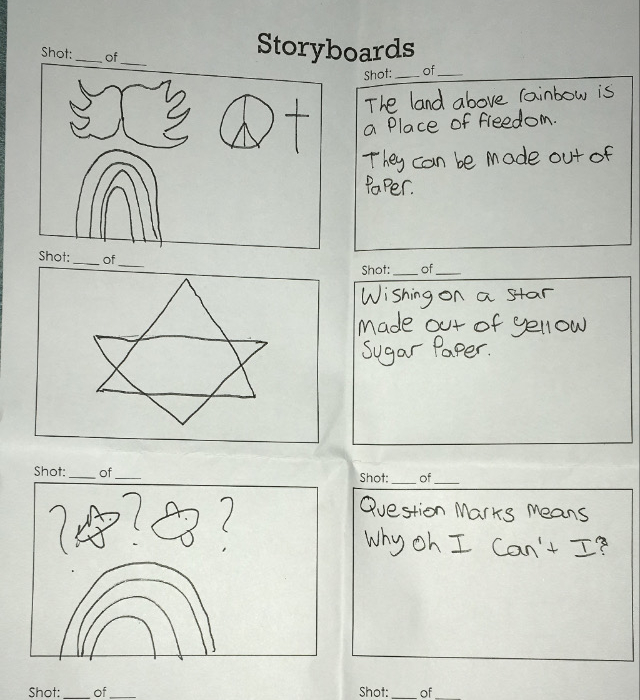
The Storyboard for the Video:
1st draft:
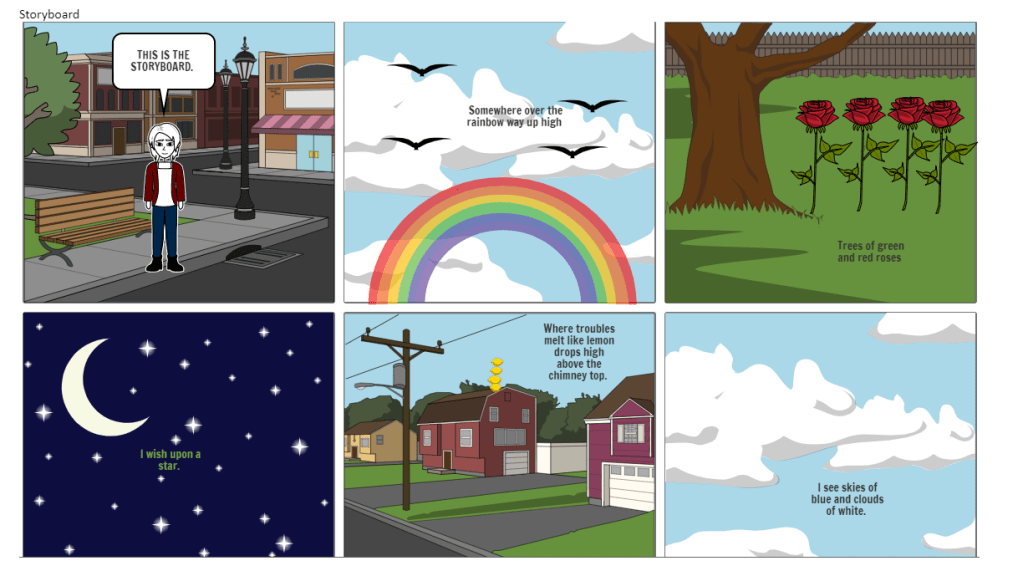
2nd draft updated:
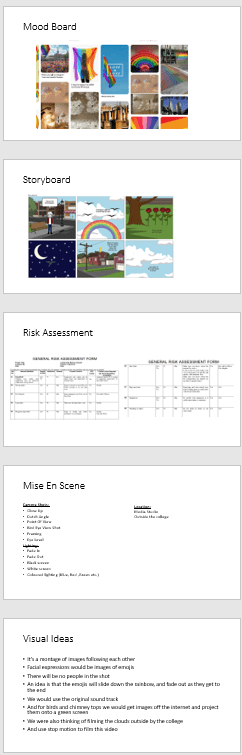
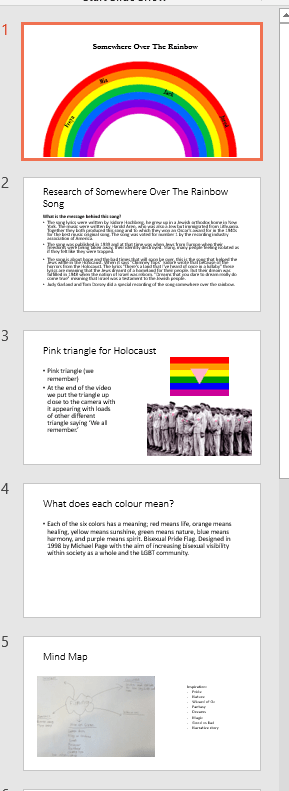
This is our Power Point Presentation:
The Mind Map with all our ideas on this sheet of paper, brainstorming what we can do for the project.

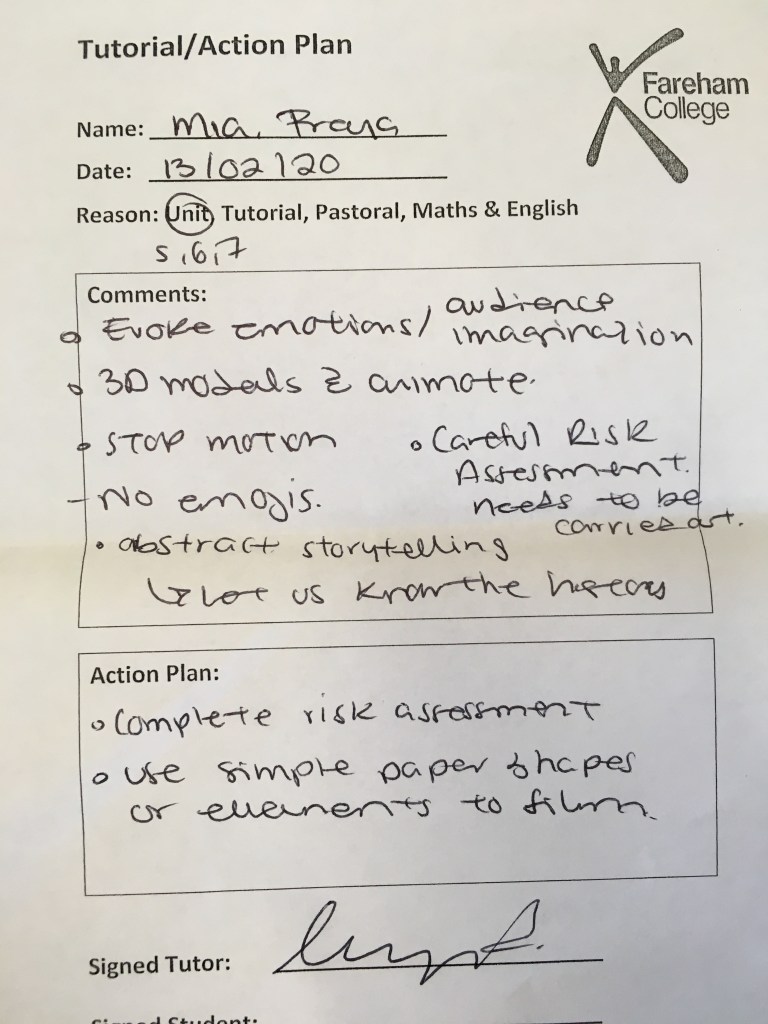
Shots for the video:
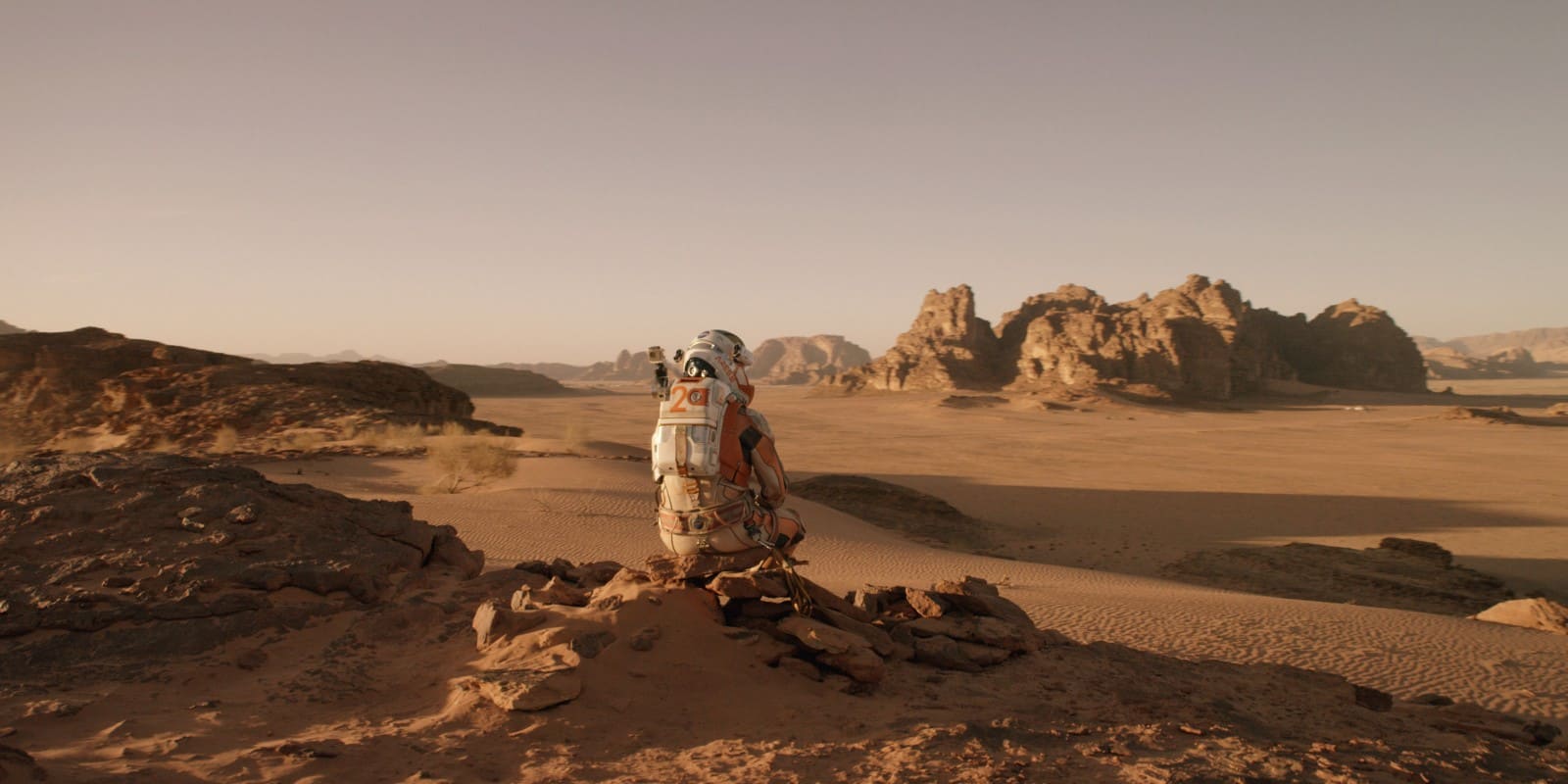
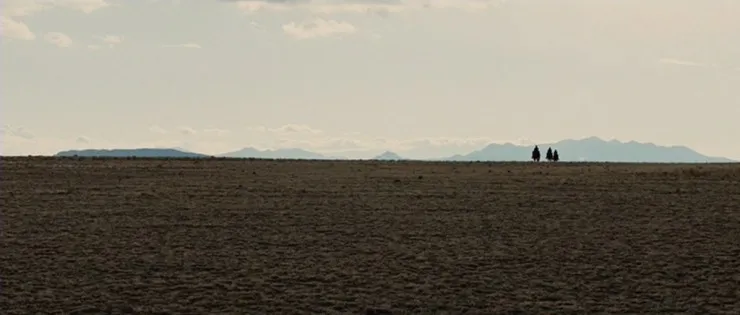
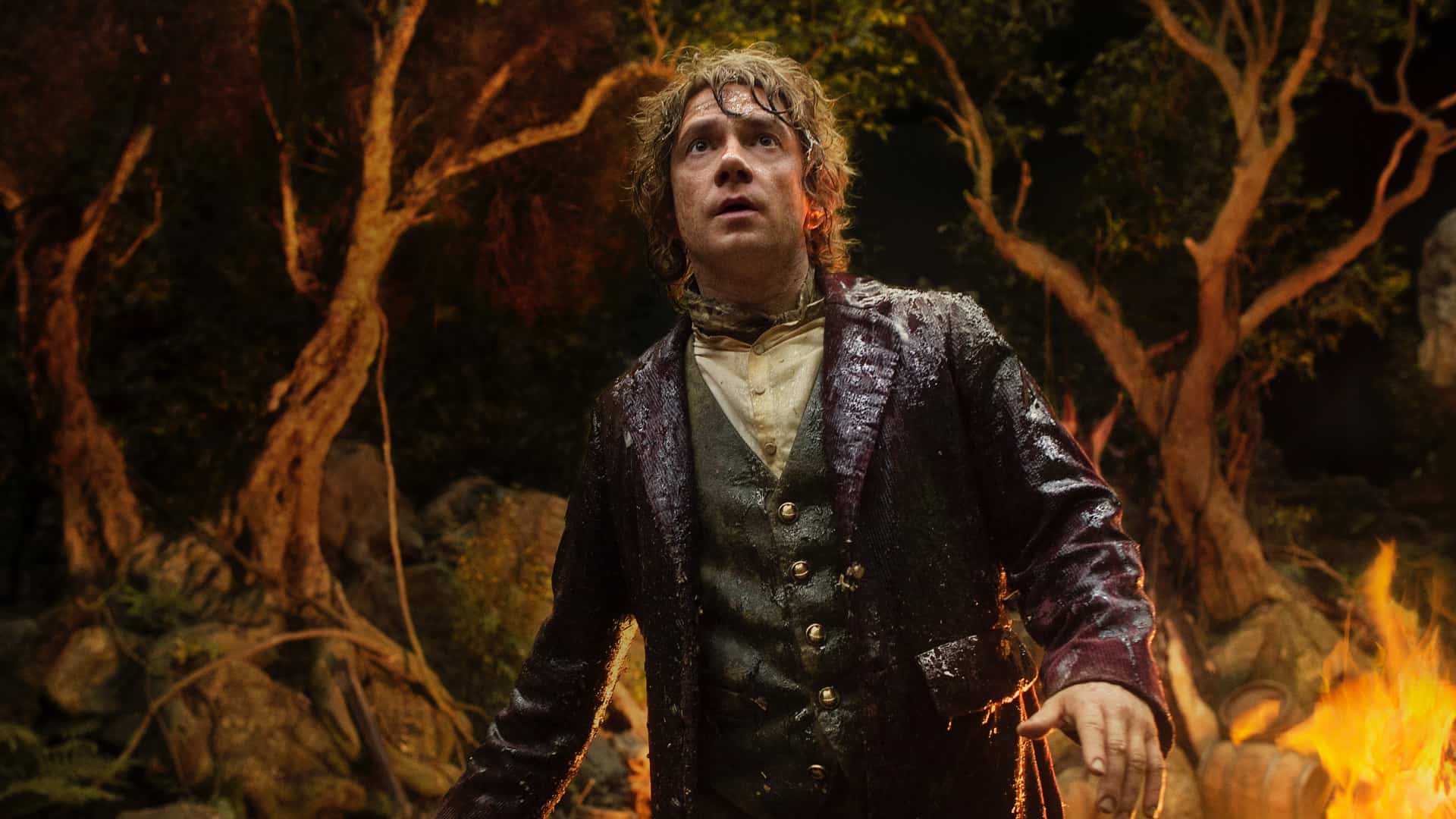


Prop Making:
Materials for this Video Project:
Moodboard:
Tilt-
Pan-
Dolly In/Out-
Zoom-
Tracking-

What is a Camera Shot in photography?
A Camera Shots is when the angles, transitions and cuts are used to express emotion, Ideas and movement.
Close Up (CU)
A Close Up is a picture showing a small part of the scene, such as a characters faces in detail. So it fills the screen, a framing in which the scale of the object is shown is large. In a close up the person’s head or some similar sized object will fill the frame. These shots can be used to show stress of a specific character at a certain moment, in a film or place. As the person central to the narrative, by removing the character in CU at the beginning of the film. It creates intimacy between the characters,there would be space between the chin and frame called air.

This is My example of a Close Up:

Extreme Close Up: (XCU)
Can only focus on the eyes, mouth or nose. The objects are very enlarged, a small part of the body shot with a zoom lens, this shot can be used to show an extreme close up of a text on a phone. They have a symbolic value during a film. How and where they recur is revealing not only of their importance, but also of the direction or meaning of the narrative. Or to signal out at a important person or object, they can show emotion, fear or happiness.
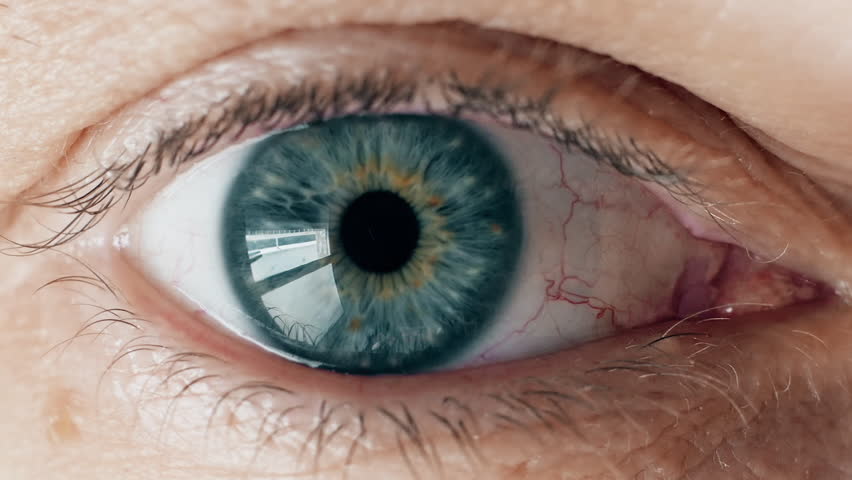
Here is my example of a Extreme Close Up:

Big Close Up: (BCU)
A tighter shot where it almost suffocates the frame means there is no air with the frame and the chin. But to be careful to not mistake it with other types of close up.
Medium Close Up: (MCU)
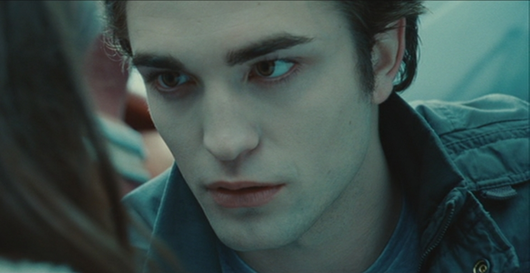
Is halfway between a Mid Shot and a Close Up , a Medium Close Up, is framing the shoulder chest to head and would fill most of the screen.
They are used frequently for the tight presentation of 2/3 actors. This shot is used in indoor sequences, allowing for a visual signification of relationships between characters. It’s also for intimacy and coming together and its the biggest Close Up.
My examples for Medium Close Up:

Medium Long Shot (MLS)/Mid Shot (MS):
Framing such an object 4/5 ft high would fill most of the screen vertically. Its called plain american its the western genre, and its important to keep a cowboys weapon in the image. Can also give a clear sense of character, in a given location and shows body language. Goes from knees and above and you can see the knees and hips.
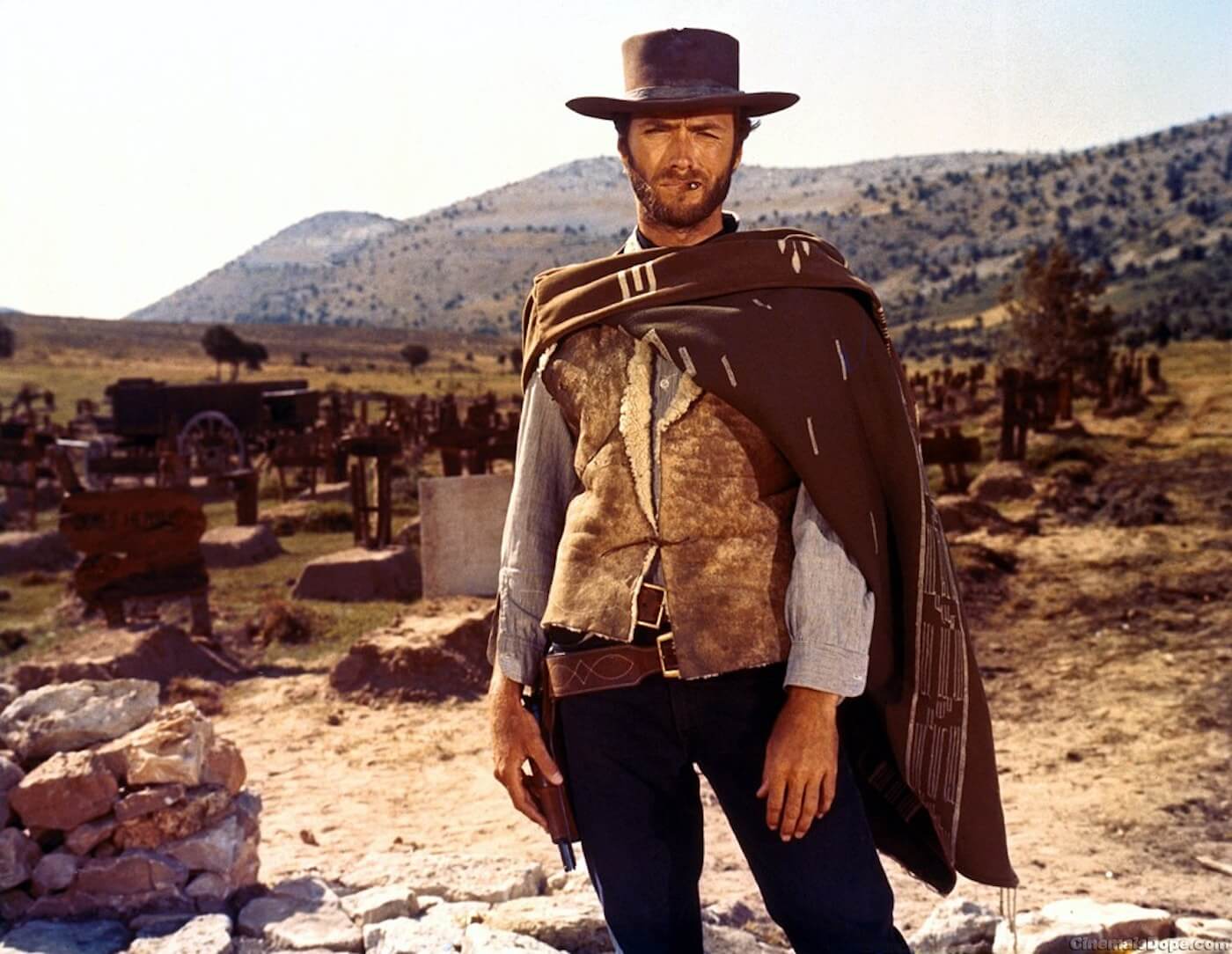
Long Shot (LS)/Wide Shot (WS)/Full Shot (FS):
A Framing which the scale of the object, shown is small a standing human figure would appear near the height of the screen. Making it a relatively stable shot that can accommodate movement without re-framing. Allows the audience to see a large number of the components of the arena. There is some air from the top of the frame to the head of a person or character.

This is My example for Long Shot:

Extreme Long Shot: (XLS/ELS)
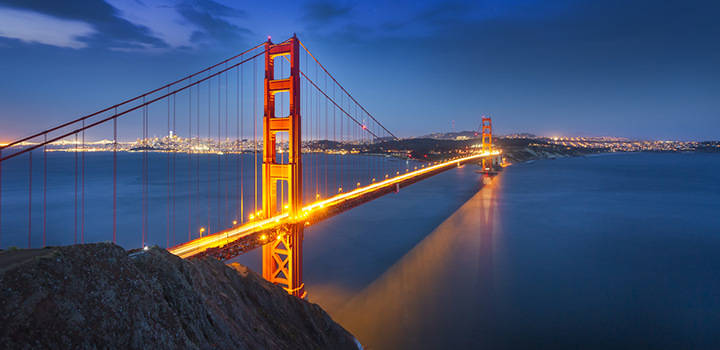
The scale of an object is very small: a building, landscape or crowd of people will fill the screen.Surroundings now have as much importance if the shot is in high angle. XLS will give an overall view, and its either the first or last shot of a sequence and can also function as a establishing shot.
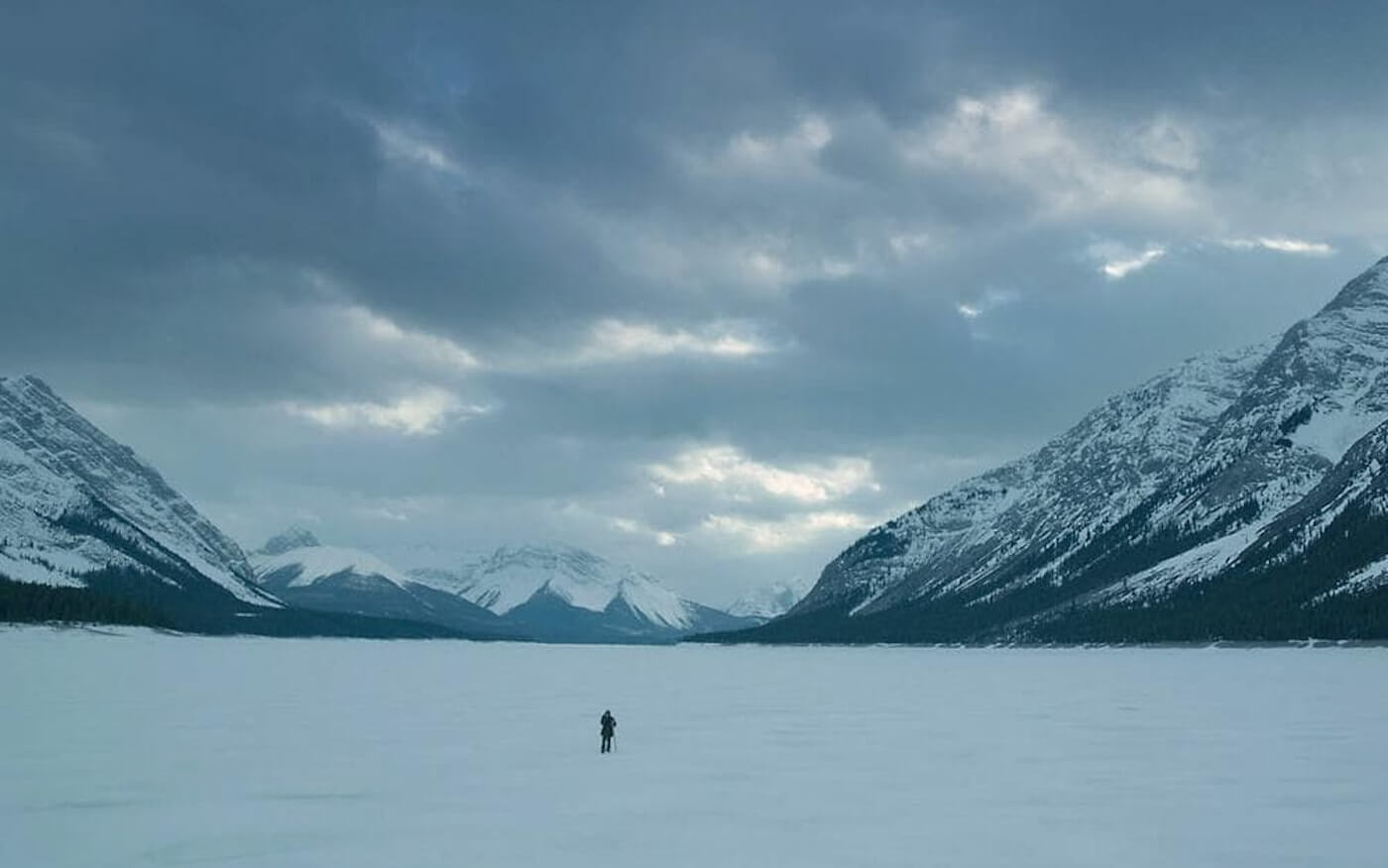
My examples of an Extreme Long Shot:


Bird Eye View Shot (BEV)/ Aerial Shot (AS):
A camera that is filmed from an air plane or helicopter, and isn’t a moving shot.

Here are My examples of a Bird Eye View Shot or an Aerial Shot, as I couldn’t really get into a helicopter. I don’t have a drone so I went to the top of a car park and took the view of a city (Southampton). its the best i could do for a aerial shot. To take these type of photos as my example on this blog post:


Point of View Shot (POV):
Point of View shows what the character sees, and are often freehand and used in horror films. The editor may change the audiences point of view to create certain effects. To make the audience feel that they are part of a story.
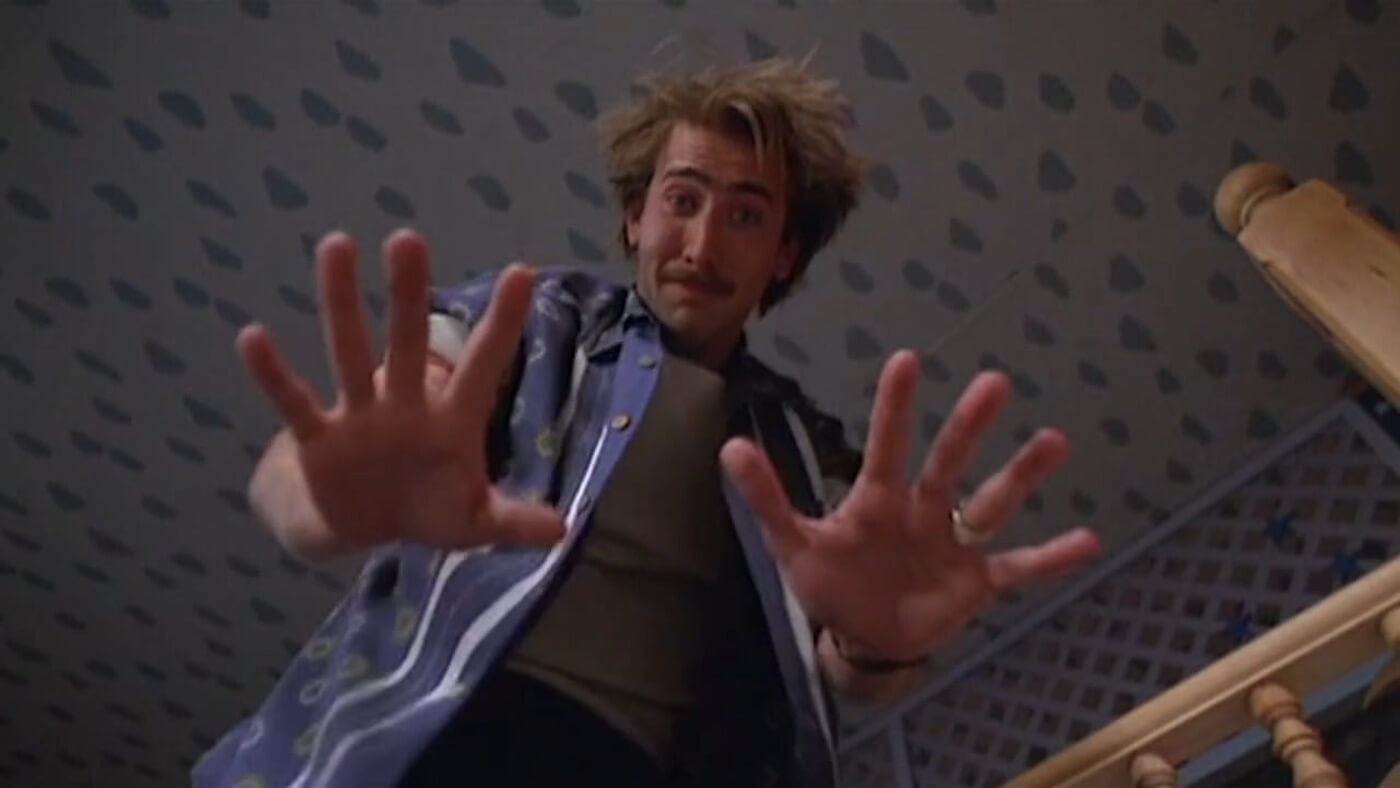
My examples of a Point of View Shot. I tried to make it look scary so the audience, feel like they are involved in a scene.


Over the Shoulder Shot (OS)/Reaction Shot:
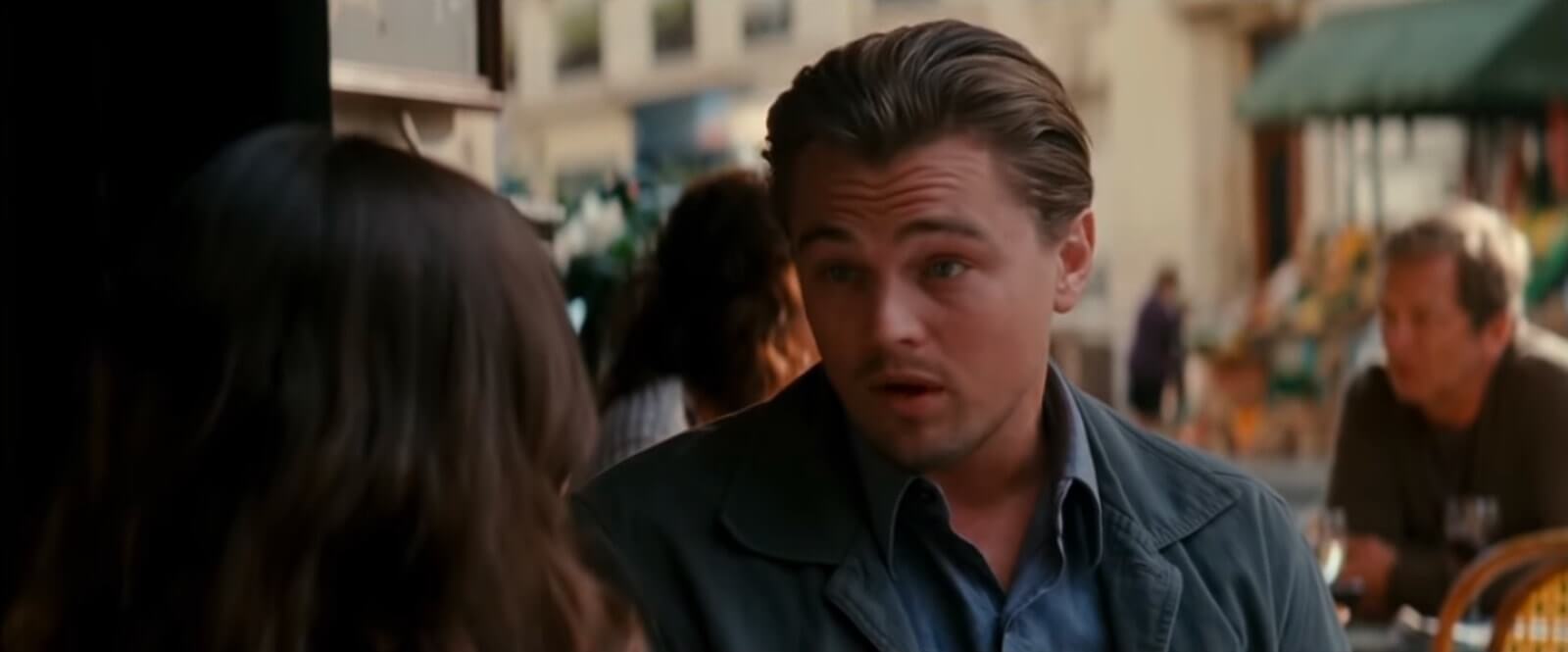
Cinematographic shot taken from over the shoulder of a character, whose back can be seen at the side of the frame. This type of shot is very common when 2 characters are having a discussion and will usually follow an establishing shot. Which helps the audience place the characters in their setting and can see expression or emotion in the characters.
My example of a Over the Shoulder Shot:


These are some photos of all the main Close Ups in one chart so its easier to look at and remember:


Mise En Scene:
Location
Lighting
Camera Angles/Shots
Props
Facial Expressions/Body Language
Costumes, Hair & Makeup
Music
Other things about the film
What is it?
Composition means to place the objects within the shot, in such a way that it looks aesthetic (Beauty).
Leading Lines:
The natural lines of something that makes you focus.

Harmony/Balance:
Can be by creating visual symmetry and achieved by colour.

Symmetry:
Doesn’t have to be the same density (symmetric), there can also be minimal differences, but doesn’t have to be perfect.

Contrast:
Show 2 worlds in a single shot, they can be complete opposites and can be by colour.
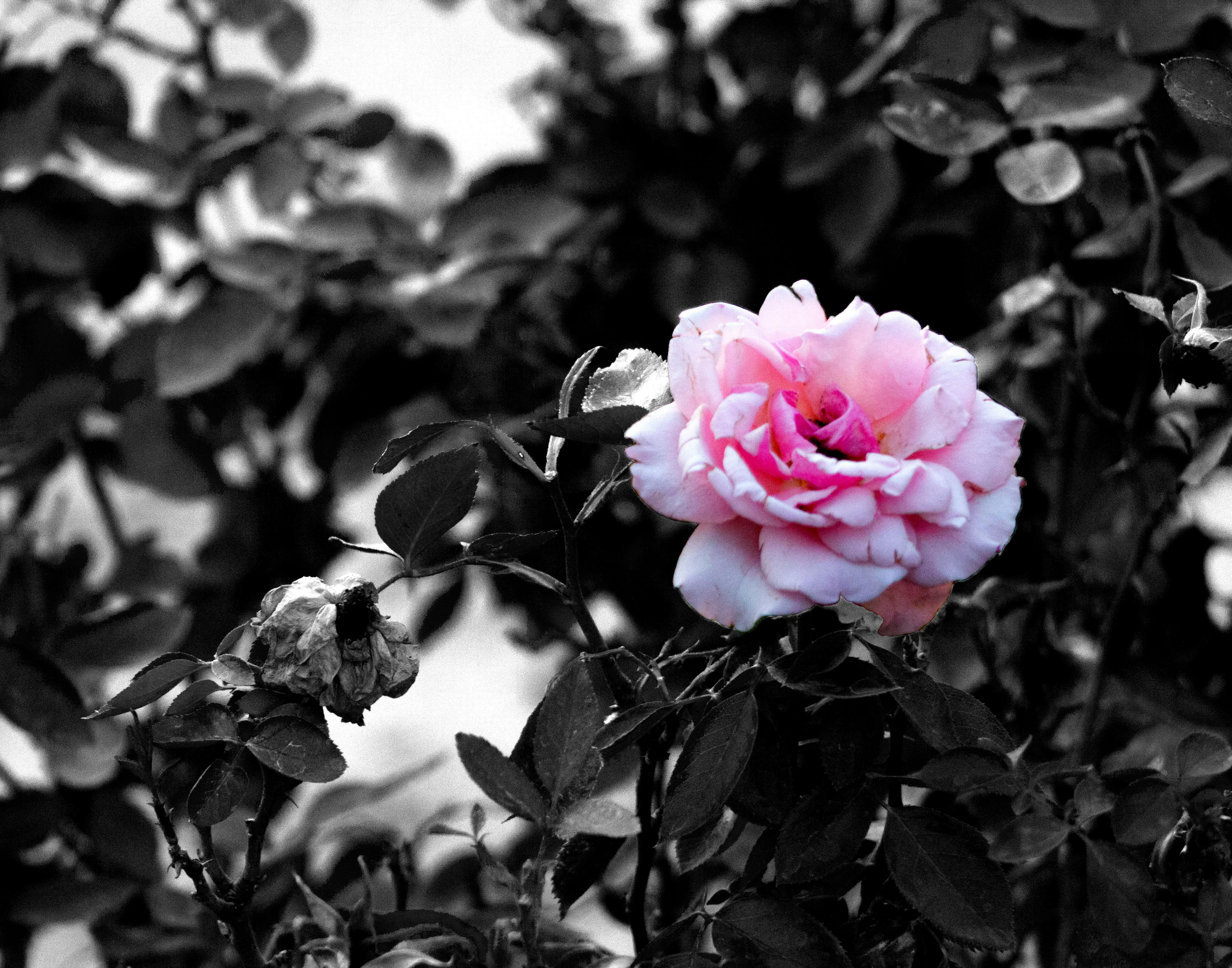

Texture:
Texture can be seen by lighting, and being close up to the subject, and use Extreme Close Up.


Repetition:
Makes the image more interesting and capture things that make a sense of unity. Can be by shape, colour, elements, proportion.

Alignment:
The main vertex, the image holds a central point and all the elements will work around it.


Gestalt:
Create links between what you think and understand.

Movement:
Captured through long shutter speeds which record movement, a moment, emotion expressed. Its a photograph but taken in freezing time.

Unity
All the elements in the photo make one whole part in.

Cropping
The removal of unwanted outer areas from a illustrated image/photographic.

First Idea:
Abstract:
Real Life:
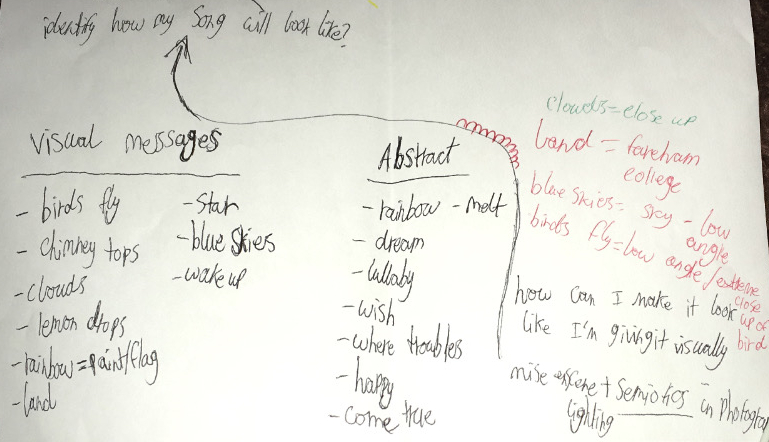
2nd idea:
UPDATE ON VIDEO PROJECT IDEAS:
This is a photo of the song lyrics being analysed into depth:
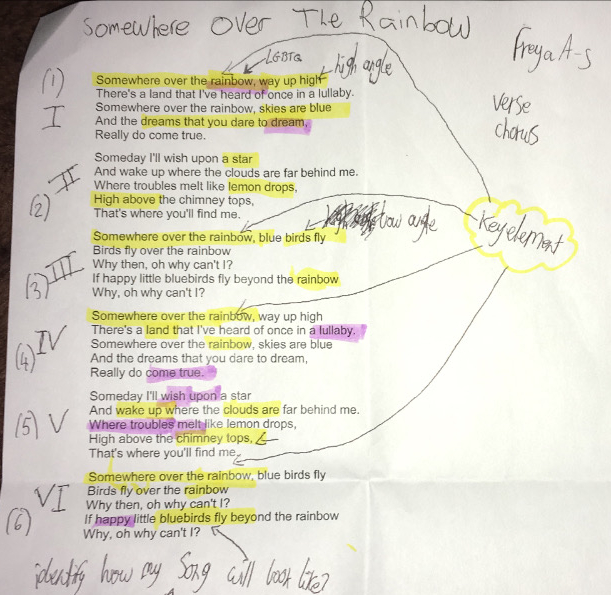
I’ve split them into 2 categories which is Abstract and Visual. So everything in the lyrics if they can’t be seen in real life or won’t be able to get the visuals ,at a certain time then they will go to Abstract to draw. All the visual words in the lyrics is something that we can see and will be able to do. This is how we got inspiration for ideas on what to do, from figuring out the lyrics and what they mean. But the actual meaning behind the lyrics is very sad, and kinda dark and it isn’t happy at all from the way its been sung.
This blog post will be all about our planning for this video project and what we are going to do.
What we’ve all come up with so far:
Camera Shots:
Lighting:
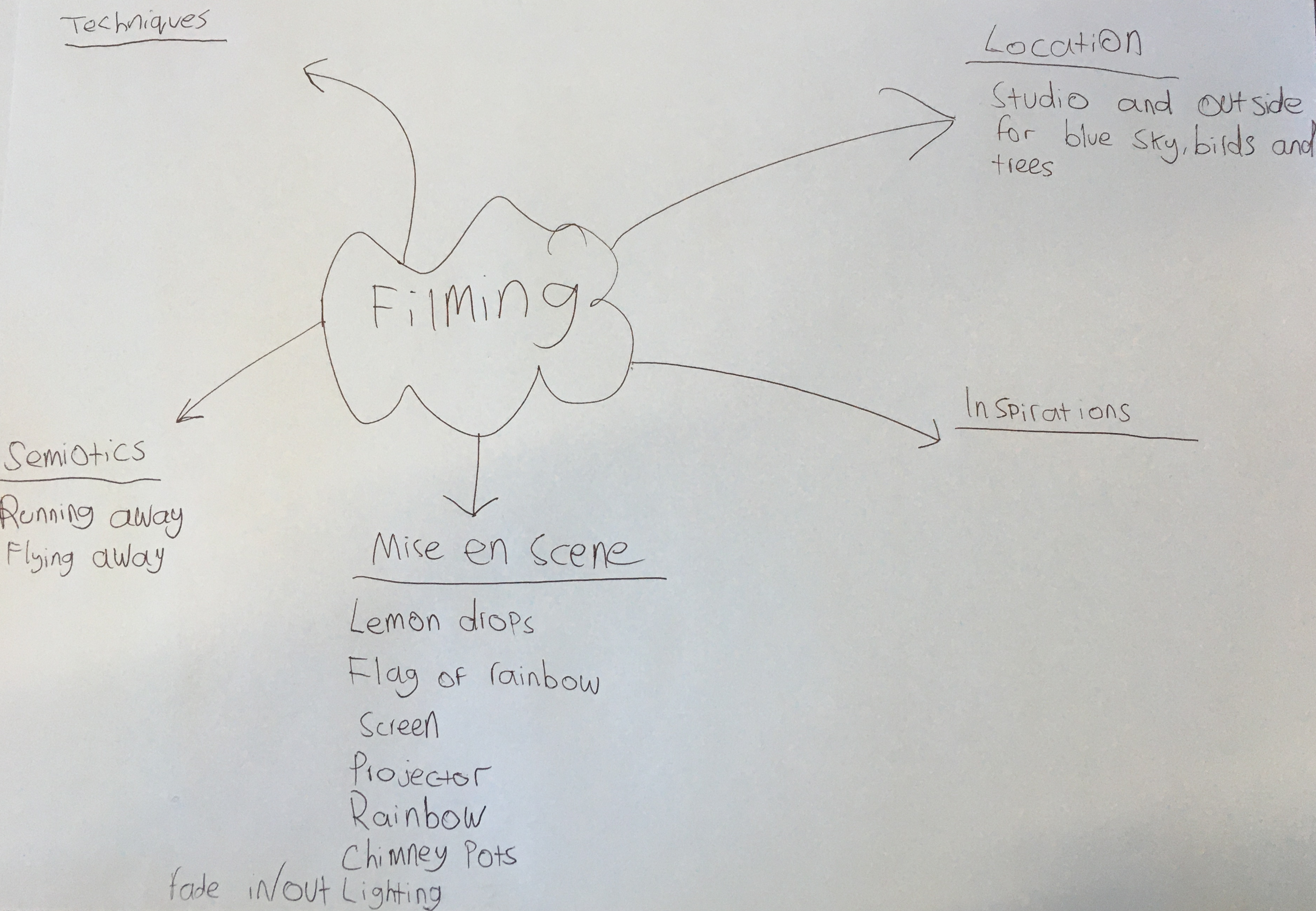
Techniques:
Inspiration:
Location:
Mise En Scene:
To Do:
My Mood Board for our video idea:
This is our mind map of all ideas for this project:
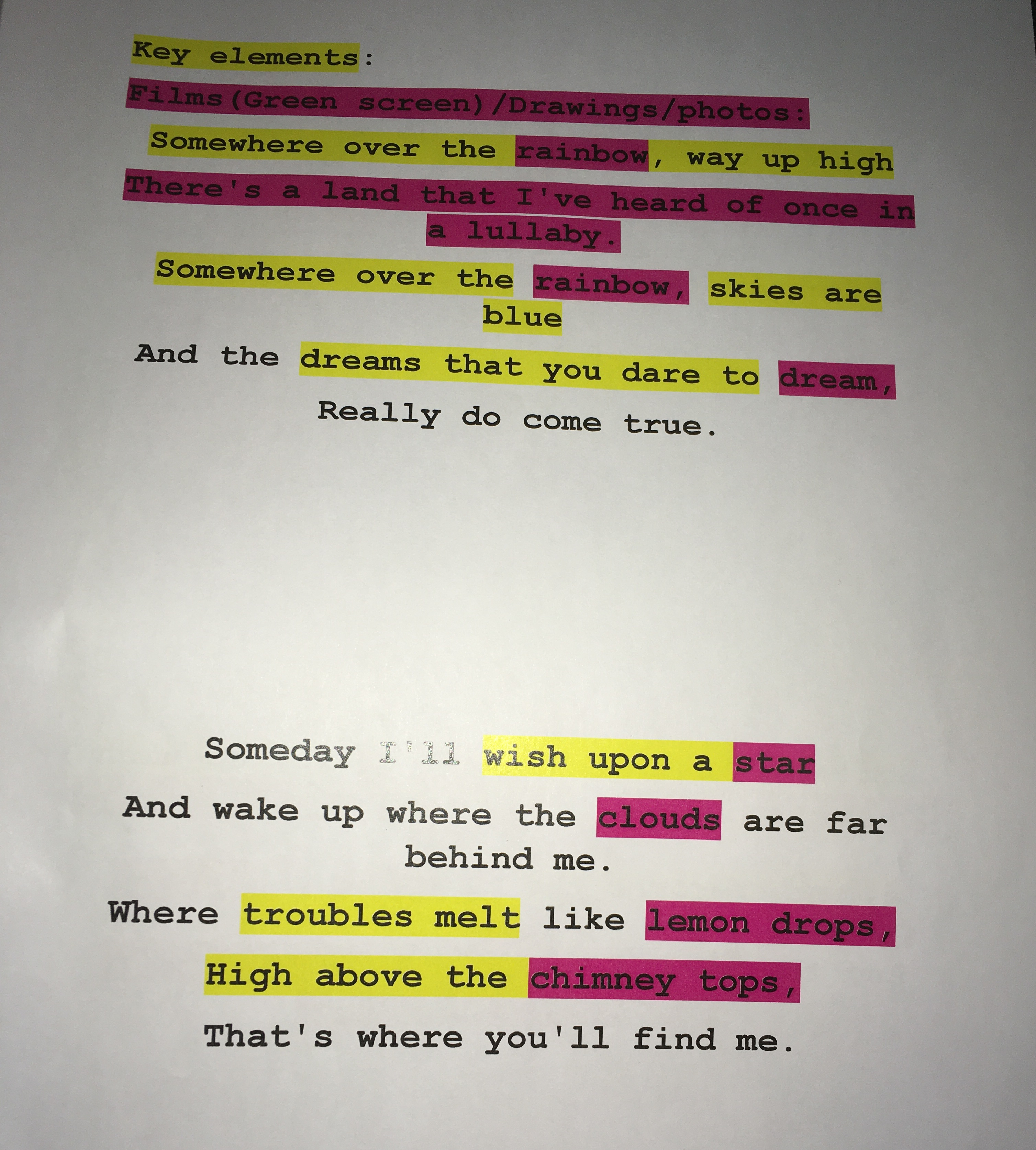
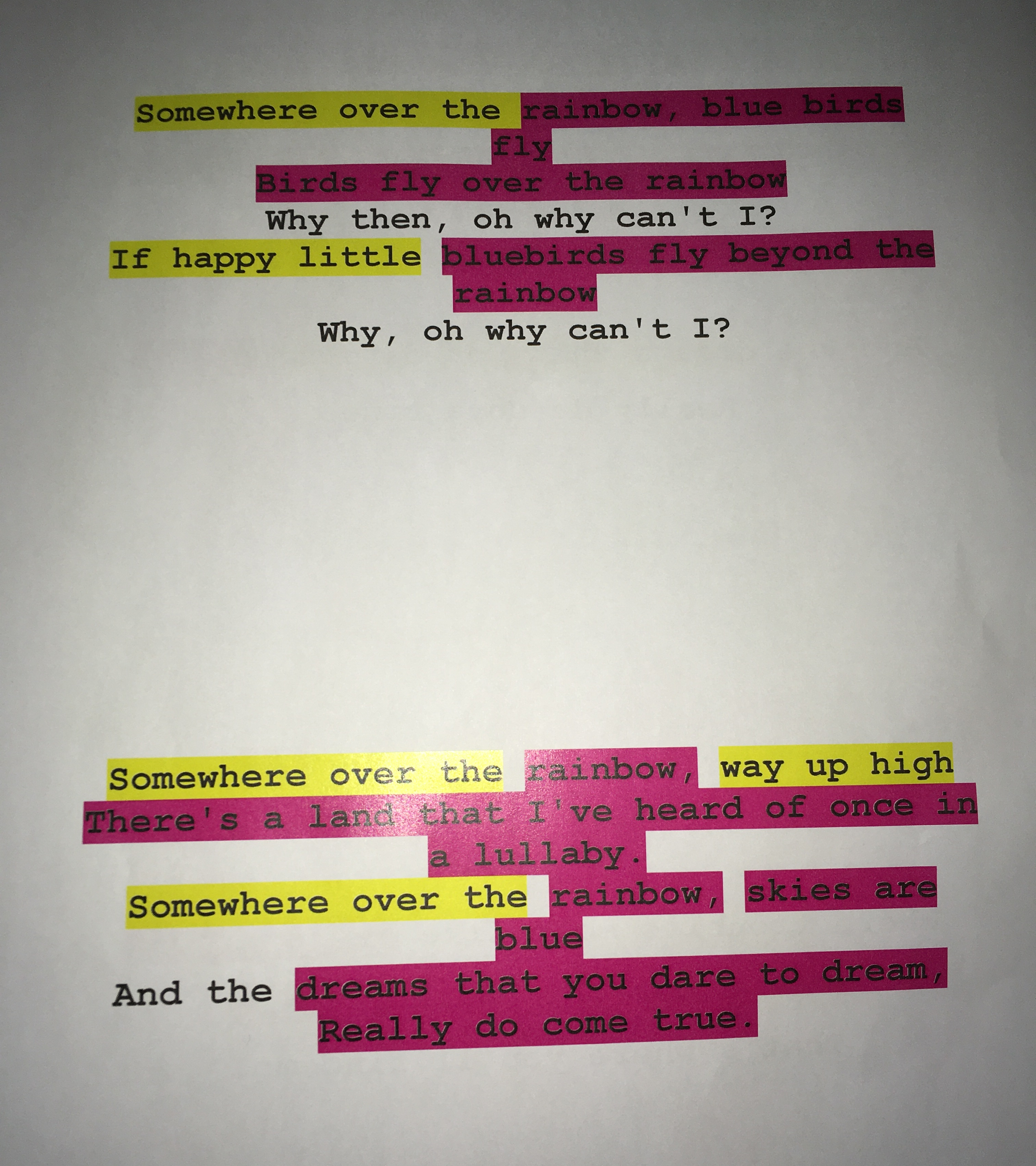
This is our script for a first draft, the different colours mean different things:
These are some examples for inspiration of stop motion to use:
Hope but in stop motion:
Update we are scraping the idea of having emojis for facial expressions and instead are going to use stop motion to film our video. For the song Somewhere Over the Rainbow.
This is our Powerpoint presentation:

 My Audio & Video Blog